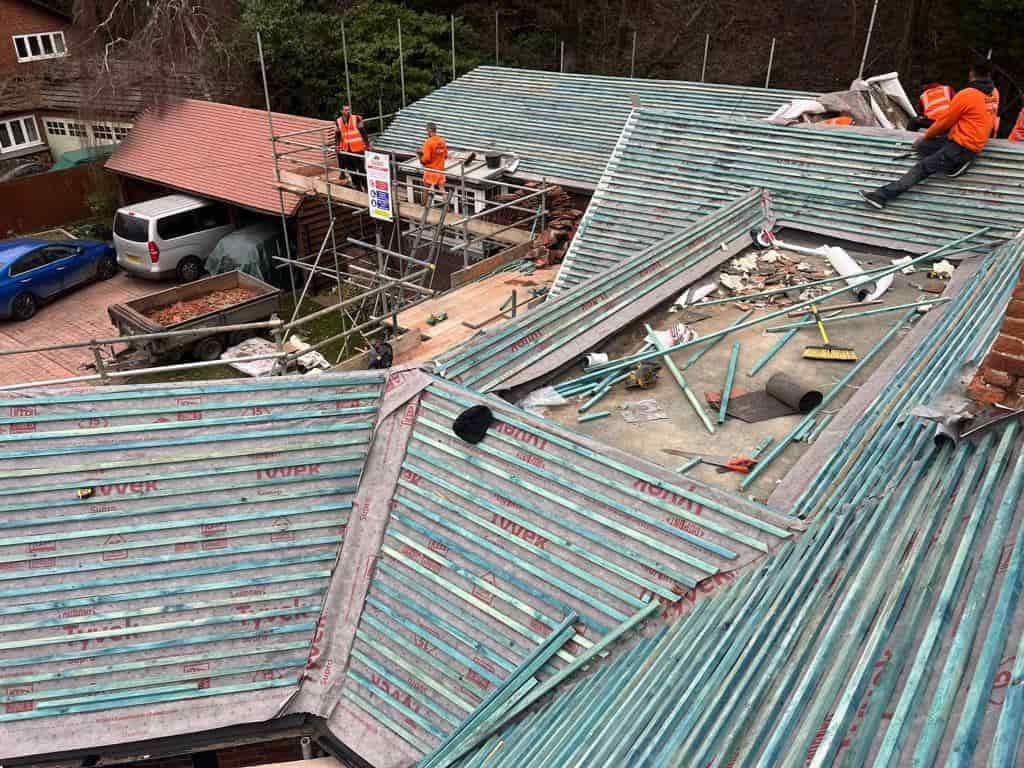
Should Loose or Missing Roof Tiles Be Repaired Straight Away?
Loose or missing roof tiles should be inspected and repaired promptly, even when there are no visible signs of water entering the property. Tiles form the roof’s primary defence against rain, and any gap or misalignment can expose the underlay and supporting materials beneath.
A single displaced tile may appear to be a minor defect, but leaving it unresolved can allow wind and rain to affect a wider area. Early attention often helps keep the repair localised and reduces the risk of damage spreading to neighbouring tiles, battens, insulation or internal finishes.
For homeowners in Mexborough, South Yorkshire, arranging a professional assessment is the most reliable way to establish why the tile has moved and what work is required to restore the roof correctly.
Why Do Loose and Missing Roof Tiles Need Prompt Attention?
The urgency of a tile repair depends on the tile’s position, the condition of the surrounding roof and the weather. However, waiting for an internal leak to appear is rarely advisable.
The Underlay Is Not Intended to Be the Main Roof Covering
When a tile slips or disappears, the roofing underlay may remain visible beneath it. Although this layer provides secondary protection, it is not designed to replace the external covering for prolonged periods.
Ageing underlay may already contain small tears, weakened areas or gaps around fixings. Wind-driven rain can find these openings and reach the battens or roof space. Restoring the tile covering promptly reduces continued exposure.
Water Can Enter Before a Ceiling Stain Appears
A roof defect can allow moisture into the structure without creating an immediate indoor drip. Water may collect within insulation, soak into timber or travel along the underlay before becoming visible on a ceiling.
By the time staining appears indoors, the leak may already have affected materials beyond the original opening. A dry ceiling is therefore not proof that a loose or missing tile can be left unattended.
Wind Can Worsen the Damage
A displaced tile can create an opening through which wind enters beneath the surrounding roof covering. This pressure may loosen neighbouring tiles, particularly when fixings are already worn or corroded.
A tile that has moved slightly can also rattle or lift further during poor weather. Repairing the original defect may help prevent a small affected area from developing into a more extensive section of damage.
Loose Tiles May Fall From the Roof
Tiles are heavy materials. If one becomes detached from its fixing, it may slide or fall, especially from a steep roof slope.
Fragments found in gutters or on the ground can indicate damage above, even when the roof appears complete from a distance. The area below a visibly loose tile should be avoided until the roof has been assessed.
Homeowners should not attempt to climb onto the roof to reposition it. Safe access and suitable fixing methods are essential.
The Cause May Extend Beyond the Tile
A tile can move for several reasons. Strong winds may be responsible, but deterioration can also occur gradually without a noticeable storm.
Possible causes include:
- Corroded or failed fixings
- Broken tile nibs
- Rotten or weakened battens
- Incorrect installation
- Movement in surrounding tiles
- Deteriorated mortar at ridges, hips or verges
- Impact damage
- General ageing of the roof covering
Simply pushing the tile back into place may not resolve the underlying problem. The fixing point and supporting components should also be checked.
Nearby Tiles Should Be Inspected
One missing tile can be an isolated problem, but it may also reveal weakness within a larger section. Neighbouring tiles could have hairline cracks, worn fixings or slight movement that is difficult to see from ground level.
A professional repair should examine the surrounding area and confirm that the remaining tiles are aligned and secure. This helps prevent repeated call-outs for related defects shortly after the first repair.
Roof Junctions Can Increase the Urgency
Loose tiles near chimneys, valleys, roof windows, ridges and abutments deserve particularly careful attention. These areas contain multiple joints and often manage concentrated rainwater.
A displaced tile beside a valley or damaged flashing can allow water to enter at a vulnerable junction. The visible tile should not be treated in isolation if other components also contribute to the roof’s weather resistance.
What Does a Professional Tile Repair Involve?
The exact process depends on the type of roof and the cause of the defect. Work may involve removing damaged materials, installing a compatible replacement tile, renewing a failed fixing or repairing a small section of batten or underlay.
The repair should preserve the correct overlap between tiles and ensure that water continues to flow towards the gutter. Any disturbed neighbouring tiles must also be reinstated securely.
Matching the replacement is important for both performance and appearance. Its size and profile must suit the existing covering rather than merely looking similar from ground level.
When Might More Than a Local Repair Be Needed?
A focused repair is often suitable when only one or two tiles are affected and the surrounding roof remains sound. More extensive work may be appropriate when tiles are slipping across several slopes, fixings are failing widely or the battens and underlay have deteriorated.
Other warning signs include repeated leaks, numerous cracked tiles, sagging areas and repairs that do not remain secure. In these circumstances, replacing individual tiles may treat the visible symptoms without resolving the broader issue.
Why Early Professional Attention Adds Value
ATY Roofing Mexborough can inspect loose or missing roof tiles in Mexborough, South Yorkshire, identify why they have moved and assess the neighbouring materials. This enables the repair to address the underlying cause rather than only closing the visible gap.
Prompt diagnosis also helps determine whether the problem is genuinely localised or connected to wider deterioration.
Conclusion
Loose or missing roof tiles should generally be repaired as soon as reasonably possible. A small opening can expose the underlay, allow moisture into the roof and increase the chance of neighbouring tiles becoming displaced.
Early professional attention may keep the repair limited and prevent avoidable damage to the materials beneath. If you have noticed a loose, slipped or missing tile at your property in Mexborough, South Yorkshire, contact ATY Roofing Mexborough to arrange a professional roof inspection.
Call us on: 01709 803 086
Click here to find out more about ATY Roofing Mexborough
Click here to complete our contact form and see how we can help with your roofing needs.